
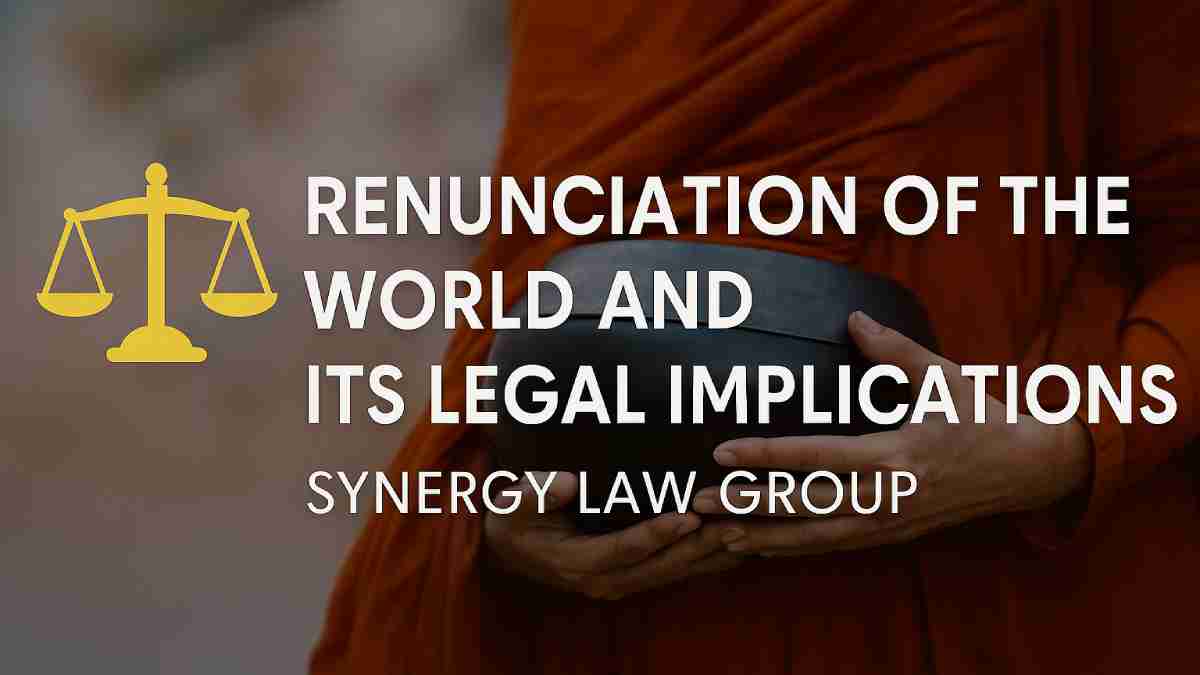
Renunciation of the World and Its Legal Implications
In this article
- Why Renunciation Becomes a Family Law Issue
- Marital Responsibilities and Renunciation
- Impact on Child Custody
- Maintenance and Financial Obligations
- Property, Assets, and Legal Rights
- Succession and Civil Death
- Emotional and Social Implications
- Legal Procedures Involved in Renunciation-Related Disputes
- Why Professional Legal Support Is Essential
- Frequently Asked Questions
Renunciation of the World – Renunciation is a deeply emotional and spiritual decision. When a person chooses to leave worldly life, give up material possessions, or detach from family responsibilities, the impact reaches far beyond personal beliefs. It affects the spouse, children, parents, and sometimes even larger communities. In India, renunciation—often connected with spiritual calling or religious transitions—carries significant legal consequences.
Understanding Renunciation in the Indian Context
Renunciation traditionally refers to a person voluntarily giving up worldly duties, relationships, and possessions to pursue spiritual life. It may involve becoming a monk, sanyasi, ascetic, or follower of specific spiritual traditions. Although renunciation is respected in Indian culture, it still intersects with the law in important ways.
While spiritual commitment is personal, responsibilities like marriage, parental duties, property ownership, and financial obligations are legal. Therefore, renunciation does not automatically erase a person’s legal ties unless certain legal procedures take place.
Why Renunciation Becomes a Family Law Issue
Renunciation affects families in many ways. For example:
- A spouse may feel abandoned.
- Children may lose financial support.
- Property may remain unattended.
- Marital duties may no longer be fulfilled.
Consequently, renunciation often leads to legal questions related to:
- Divorce
- Maintenance
- Guardianship
- Property distribution
- Succession
Marital Responsibilities and Renunciation
One of the most common legal issues is whether renunciation ends a marriage. In Indian law, renunciation can be a valid ground for divorce in some personal laws. For example, certain laws consider renunciation equivalent to “civil death,” meaning the spouse may seek dissolution of marriage.
However, the court evaluates:
- Whether the renunciation is genuine
- Whether the spouse abandoned the family
- Whether duties and obligations were intentionally left behind
Impact on Child Custody
In most cases, the parent who renounces worldly life may not remain involved in day-to-day responsibilities. Therefore, the other parent or guardian often receives full custody.
Still, the renouncing parent may request visitation or limited interaction if they remain mentally and emotionally stable.
Maintenance and Financial Obligations
Renunciation does not automatically free a person from financial duties. Courts may still require the renouncing individual to provide:
- Spousal maintenance
- Child support
- Educational expenses
- Health-related payments
If the person has assets, income, savings, or property before renouncing, those resources may be directed toward dependents.
Property, Assets, and Legal Rights
When someone renounces the world, questions arise about what happens to their property. Some may attempt to donate everything to religious institutions. Others may leave property unmanaged, creating confusion.
Legally, a person cannot dispose of joint property without the consent of co-owners. Moreover:
- Children and spouse retain their lawful rights.
- Inheritance laws still apply.
- Gifts or transfers made under pressure or undue influence can be challenged.
Succession and Civil Death
In some interpretations of personal law, renunciation may be seen as “civil death.” This allows family members to initiate succession procedures, claim legal heirship, and manage ancestral property.
However, modern courts evaluate each case with care. They ensure renunciation is voluntary, permanent, and not a temporary retreat.
Emotional and Social Implications
Although renunciation may be spiritually meaningful, it often triggers emotional turmoil in families. Spouses feel abandoned, children feel confused, and elderly parents feel unsupported. Social pressure, community expectations, and personal guilt may complicate the situation further.
Legal Procedures Involved in Renunciation-Related Disputes
Families may need to initiate one or more legal processes depending on the situation:
- Divorce petitions
- Maintenance applications
- Child custody cases
- Property protection orders
- Succession or partition suits
- Appointment of guardians
Why Professional Legal Support Is Essential
Renunciation cases combine emotional sensitivity with legal complexity. Without guidance, families may make decisions that lead to long-term consequences. Professional legal support ensures:
- Clear understanding of rights
- Protection of children and dependents
- Transparent handling of property
- Fair and lawful settlements
- Peaceful resolutions where possible
Frequently Asked Questions
What does “renunciation of the world” mean in legal terms?
In simple legal language, renunciation means a person voluntarily gives up worldly life, material possessions, and social responsibilities to follow a spiritual path. Legally, this decision affects marriage, guardianship, inheritance, and property rights. Courts often examine whether the renunciation is genuine and whether dependents are left without support. A family court advocate helps interpret these issues clearly.
Does renunciation automatically dissolve a marriage?
No, renunciation does not automatically end a marriage. A spouse who renounces worldly life must either file for divorce or allow the other spouse to file. Many courts consider renunciation as a valid ground for divorce because it results in abandonment of marital responsibilities. However, the court still checks the rights of the spouse and children to ensure they are not left vulnerable.
Can a person who renounces their life give away all their property?
Yes, they can, but with limitations. They cannot deprive dependents such as minor children or a legally supported spouse. Property transfers made under emotional pressure or influence can be challenged in family court. Legal guidance ensures that property distribution is fair and lawful.
What happens to parental rights when a parent renounces the world?
A parent who renounces worldly life usually loses daily custody and parental decision-making rights. Courts may award custody to the other parent or a guardian to protect the child’s welfare. Still, the parent may retain certain rights unless the court decides otherwise.
Do NRIs face extra complications if they renounce while abroad?
Yes. NRIs must comply with both Indian law and the laws of the country they reside in. Issues like immigration status, child custody orders, and property ownership become more complex. A family court advocate helps coordinate cross-border legal requirements smoothly.
Conclusion
Renunciation of the world is a powerful personal decision, but it also carries serious legal responsibilities. Families may experience emotional challenges, financial uncertainty, and complex legal concerns. With the right legal support, these challenges can be managed with dignity and fairness.